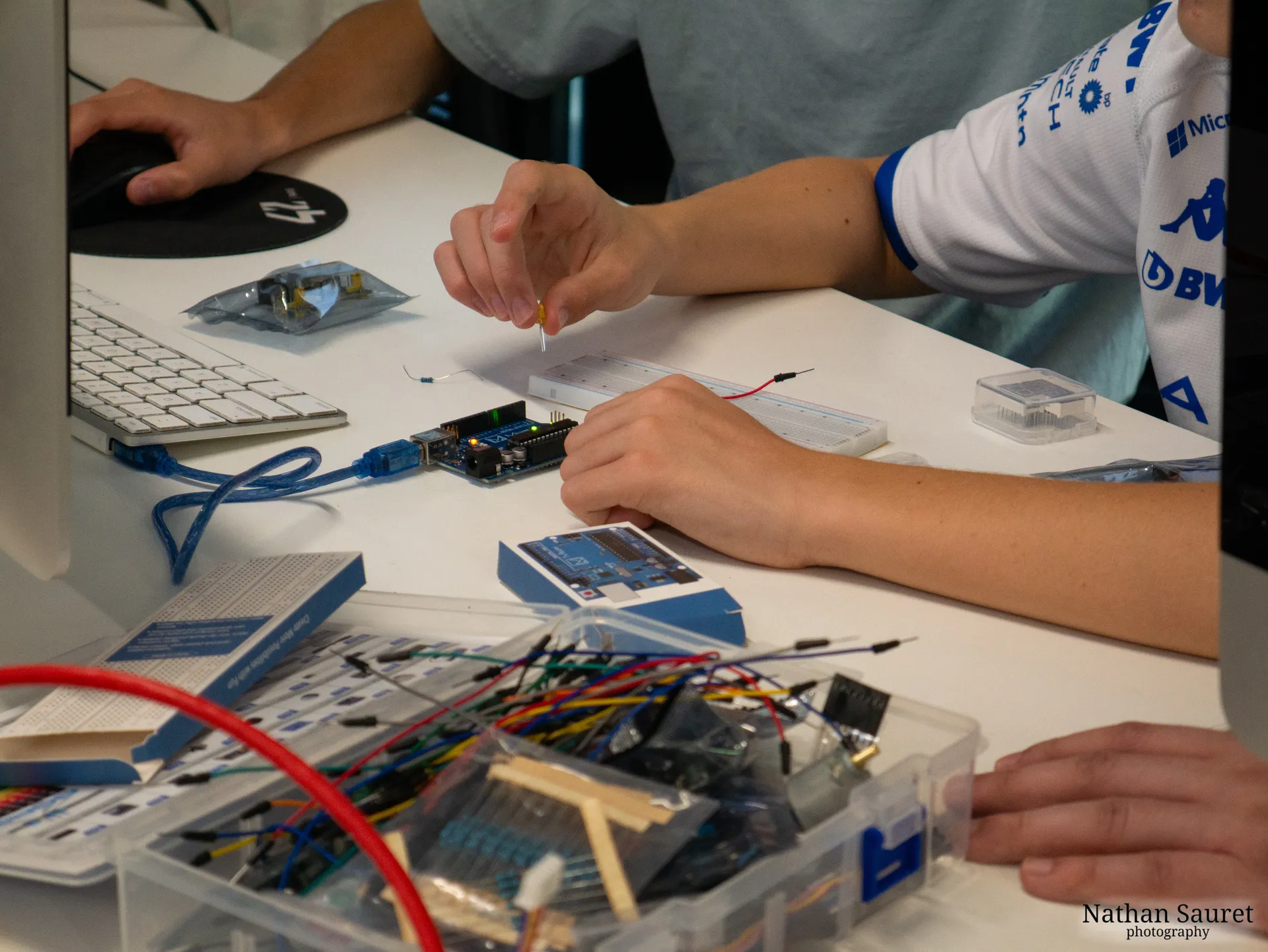
Atelier Uno
- 2 days
- Prerequisite · None
- Any time
A self-paced Arduino kit to learn the basics of electronics the easy way. The perfect test to know if you'll love it.
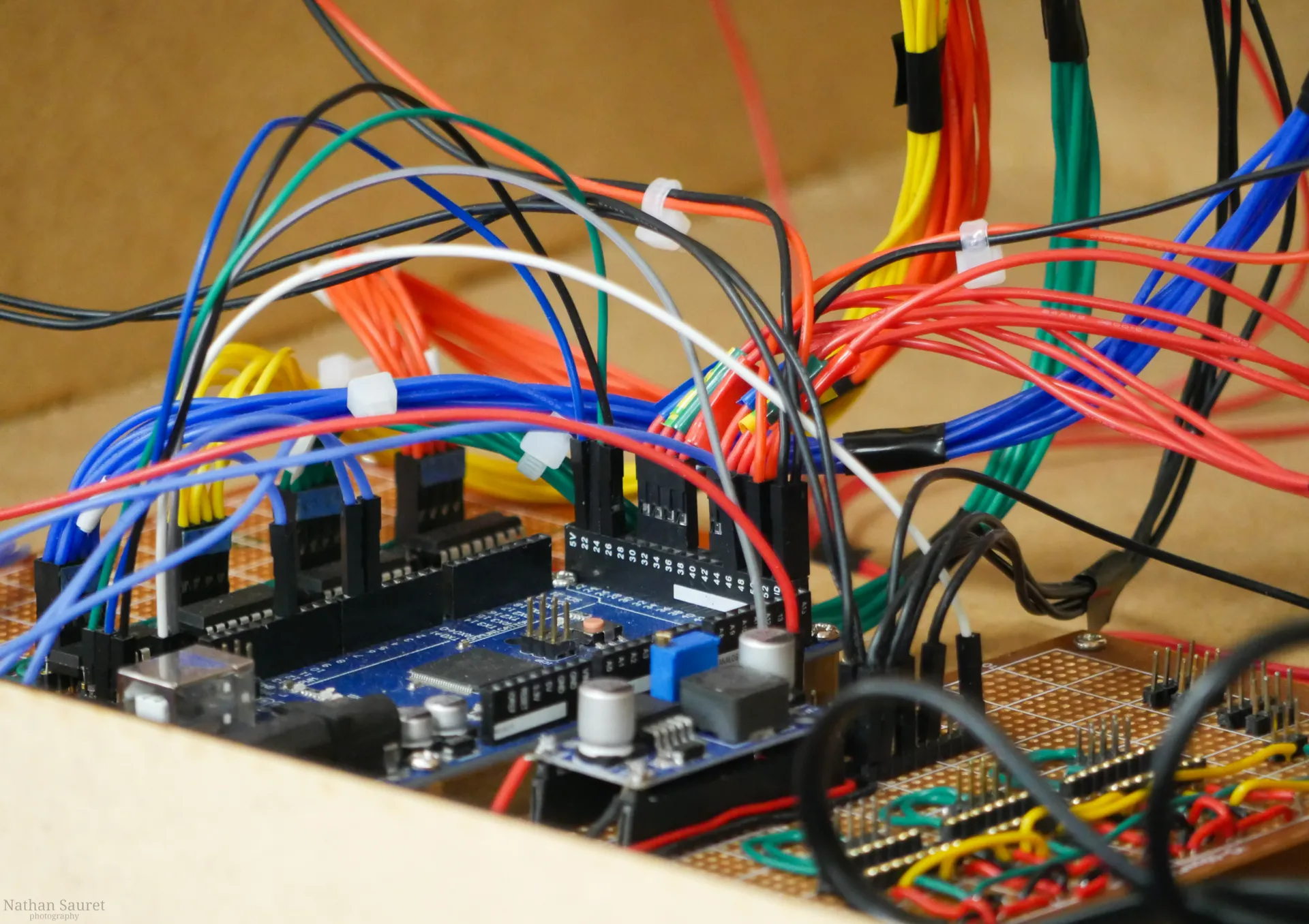
Learn
Courses of different lengths and depths. Start wherever fits you: complete beginners are welcome, and if you're fluent in C you're already halfway there.
Nathan Sauret · CC BY 4.0
Workshops stand on their own: no prerequisite, drop in whenever you like. The easiest way to find out if electronics is for you.
A self-paced Arduino kit to learn the basics of electronics the easy way. The perfect test to know if you'll love it.
Caught the bug? Join the track
Three courses that build on each other: each one opens the next, and the last one ends up in the lab's hall of fame.
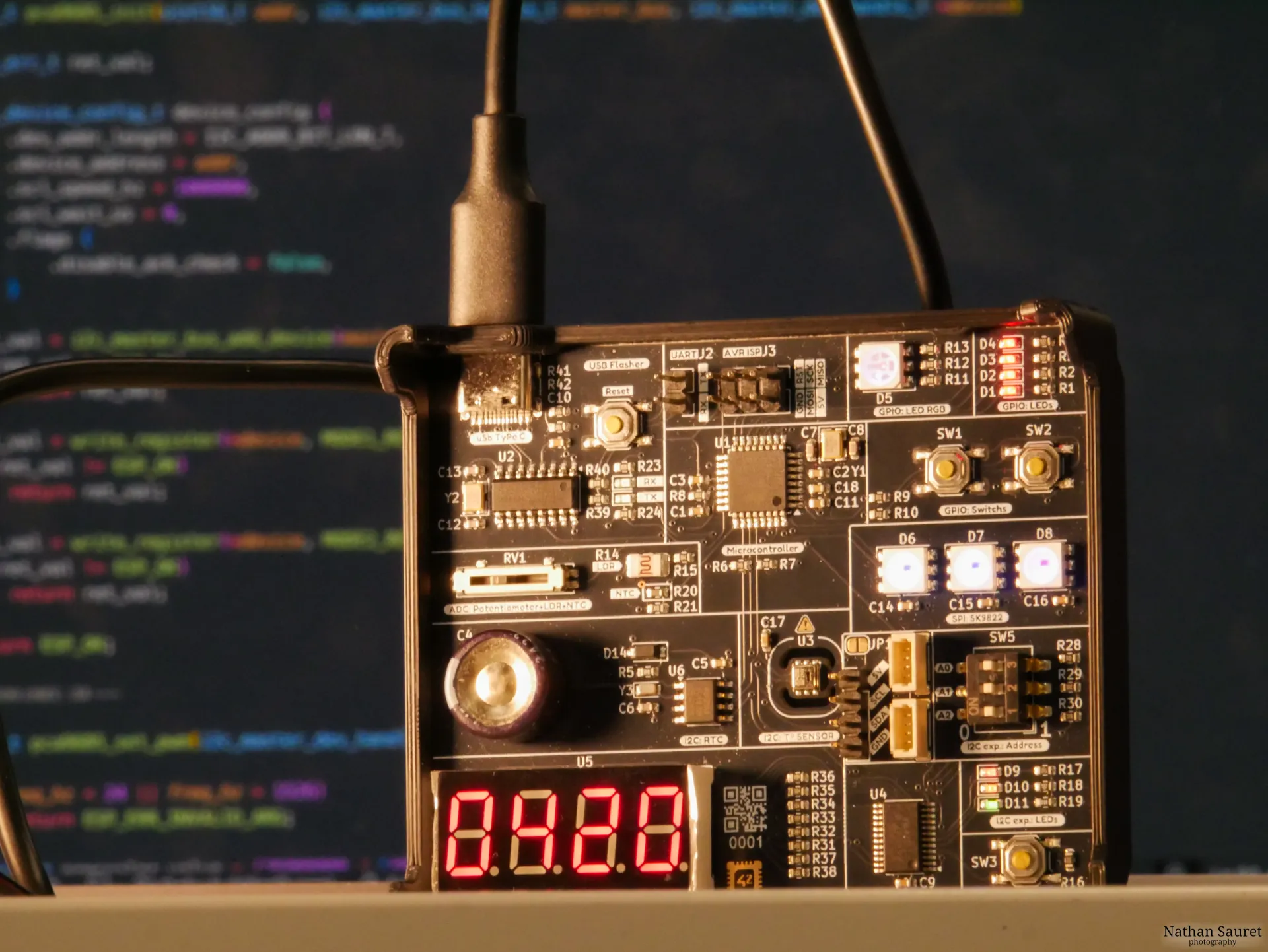
Bare-metal C on a 42chips board: timers, UART, interrupts, I2C, SPI. The 42 way to learn embedded programming.
PrerequisiteDepends on your campus
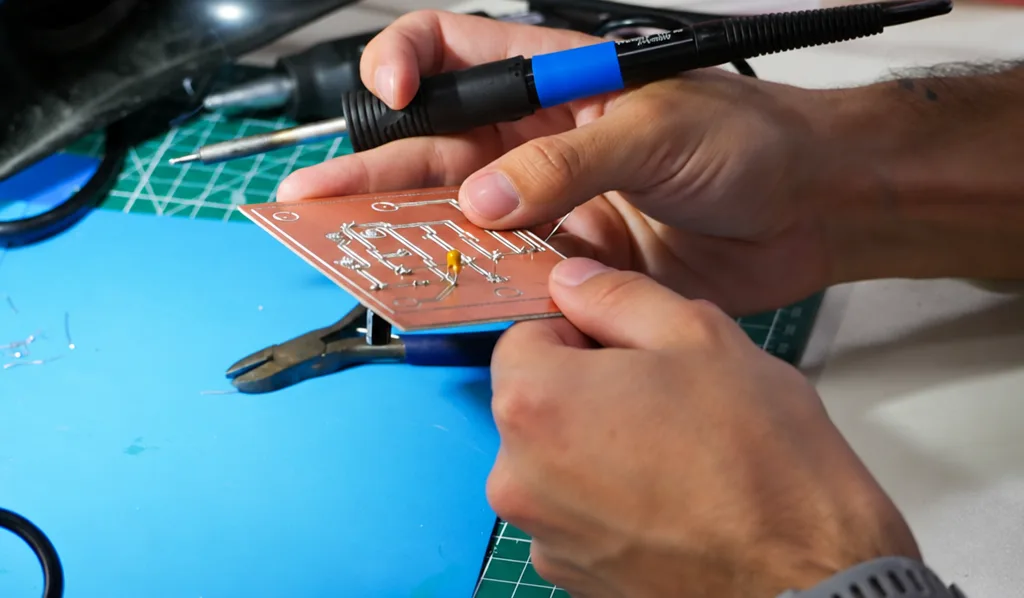
Design circuits, draw a PCB and solder it: the hardware half, right after the piscine.
PrerequisiteEmbedded piscine validated
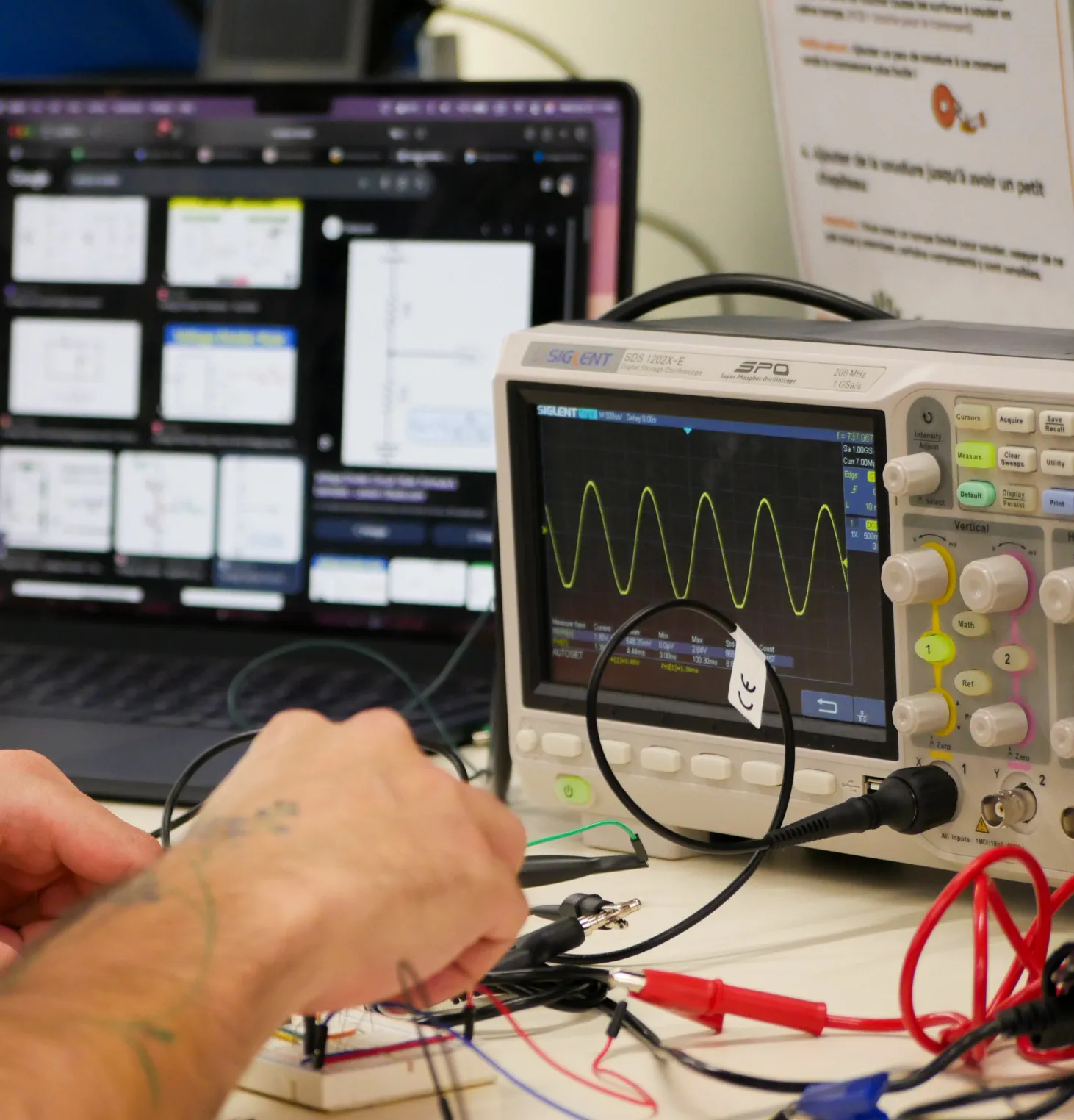
A team project in the 42 cursus: from a specification to your own finished electronic product.
PrerequisitePiscine + bootcamp validated
Your project joins the lab's hall of fame: eternal glory and hardware-wizard bragging rights.
Free for 42 students. The only things you'll spend are time, and maybe a few brain cells.